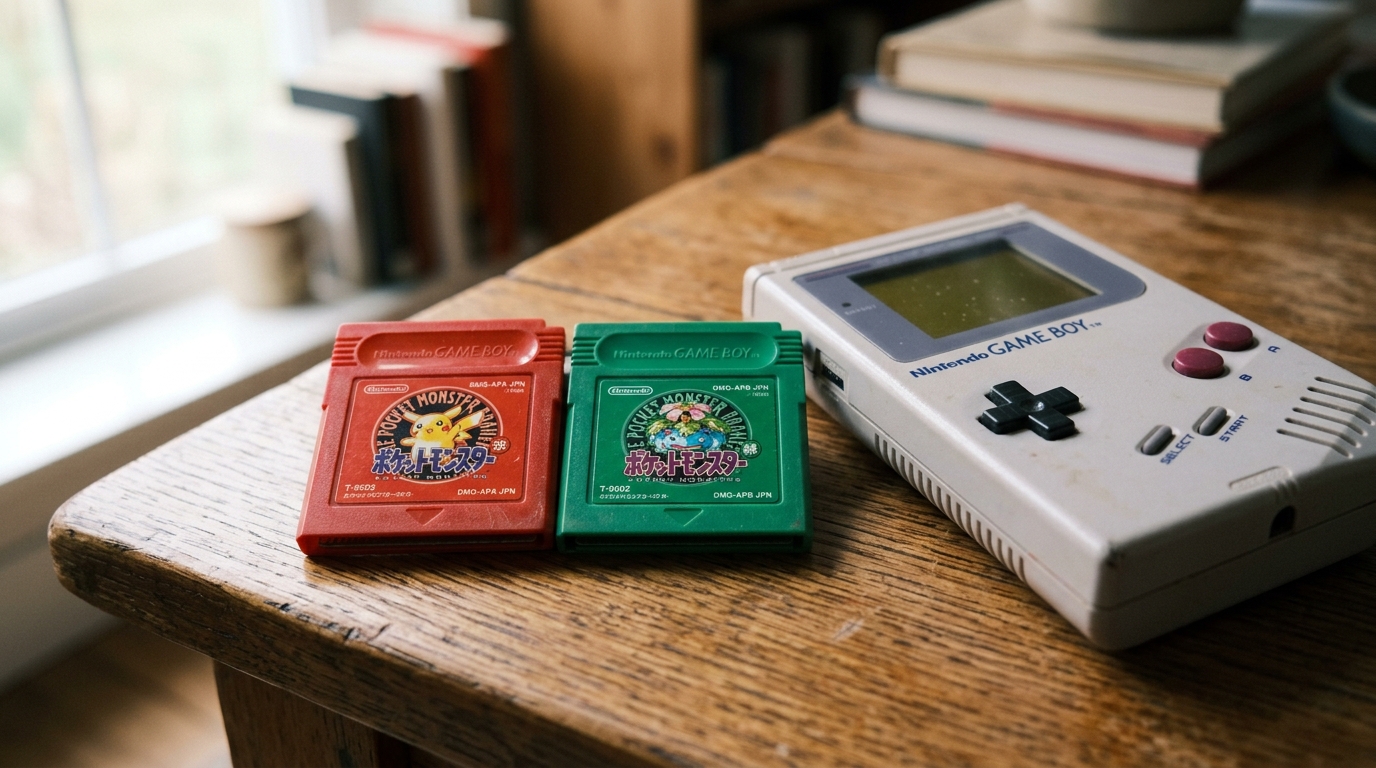
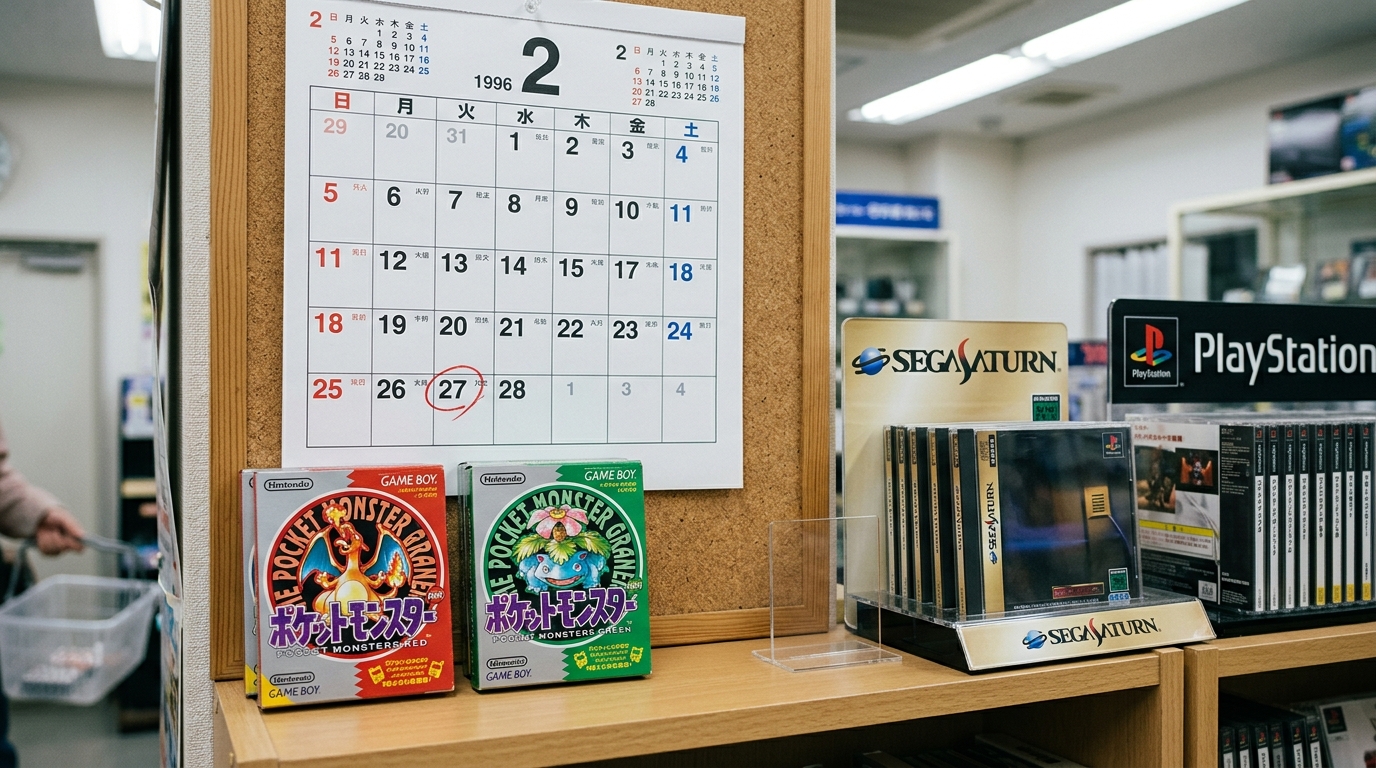
February 27, 1996, is the day Nintendo put out Pocket Monsters Red and Green for the Game Boy over in Japan.
And it really kicked off a series that has since sold more than 480 million games and pulled in over $100 billion across all its different kinds of media, which actually makes it the highest-earning entertainment property in history. So why is February 27th Pokémon Day?
Well, it’s basically because The Pokémon Company officially picked the original Japanese launch date as the franchise’s worldwide anniversary back in 2016. And ever since then, they’ve turned it into a yearly celebration filled with new game announcements, those Pokémon Presents video broadcasts.
And community gatherings happening all over the world.
This guide walks through the exact origin story, what fans can generally expect every February 27, and why this particular date, and not the 1998 U.S. release, ended up being the official birthday that Nintendo and Game Freak decided to honor.
Quick Takeaways
- Pokémon Day falls on February 27 to mark Red and Green’s 1996 Japan launch.
- The Pokémon Company officially declared this anniversary in 2016, celebrating the 20th milestone year.
- Expect Pokémon Presents broadcasts, game reveals, and global community events every February 27.
- Satoshi Tajiri’s Game Freak created the originals, published by Nintendo for the Game Boy.
- Pokémon tops approximately $147 billion in revenue, ranking as history’s highest-grossing media franchise.
The Short Answer — Why February 27 Is Pokémon Day
February 27 is Pokémon Day because that’s the date in 1996 when Nintendo released Pocket Monsters Red and Pocket Monsters Green for the Game Boy in Japan. Those two cartridges, designed by Satoshi Tajiri at Game Freak and published by Nintendo, are the literal birth of the franchise. Every Pikachu plush, every Trading Card Game booster, every Scarlet and Violet DLC traces back to that single Tuesday launch.
So when fans ask why is February 27th Pokémon Day, the answer is simple: it’s the franchise’s official birthday, and The Pokémon Company has formally recognized it as such since 2016, the 20th anniversary.
A few anchor facts worth pinning down before we go deeper:
- Launch date: February 27, 1996 (Japan only — the West didn’t get Red and Blue until September 1998)
- Launch platform: Game Boy (the original 1989 monochrome handheld, not Game Boy Color)
- Lifetime franchise revenue: over $147 billion as of 2024, making Pokémon the highest-grossing media franchise in history per Wikipedia’s franchise rankings
- Original Pokémon count: 151 — the Generation I roster sold on those first cartridges
One quick clarification: Pocket Monsters Blue also exists in Japan, but it launched later in October 1996 as a special edition. The two original sister games are Red and Green, a detail collectors care about and casual fans often miss.
February 27, 1996 — The Tuesday That Started a Franchise
February 27, 1996 happened to be a Tuesday. Nintendo shipped roughly 23,000 copies of Pocket Monsters Aka (Red) and Midori (Green) to Japanese stores that morning.
That was actually a tiny print run by Game Boy standards, where hits like Super Mario Land 2 launched with hundreds of thousands of units.
So when folks ask why is February 27th Pokémon Day, the honest answer really starts with a quiet release nobody expected to matter.
Satoshi Tajiri had spent six years pitching the concept over at Game Freak, originally under the working title Capsule Monsters. Development burned through Nintendo’s patience and most of Game Freak’s cash.
Shigeru Miyamoto reportedly kept the studio alive by championing the project from inside Nintendo, and he suggested the two-version trade mechanic that became the franchise’s commercial hook.
The Game Boy was, by 1996, basically considered old hardware. It had launched back in 1989, the Virtual Boy had just flopped hard, and the Nintendo 64 was only eight months away.
Industry analysts at the time treated those black-and-white handhelds as dead inventory sitting on shelves. Releasing a story-driven role-playing game on that platform, on an ordinary Tuesday with no marketing push behind it, honestly looked like a clearance move to most observers.
Word-of-mouth flipped the math within six months though. By year-end, sales crossed 1 million units. The trade-required mystery of Mew, which was added secretly by programmer Shigeki Morimoto using the 300 bytes of leftover memory, turned a quiet launch into a full-blown schoolyard phenomenon.
Why Nintendo Picked That Specific Date for Red and Green
So you might wonder why Nintendo actually picked February 27, 1996. It wasn’t really about feelings or tradition.
It was basically how the calendar actually worked out for them in Japan. Their business year ends on March 31, so launching something in late February lets a company count that money before the year closes.
Plus, it gets the game onto shelves before a really busy spring shopping period.
That timing is a big part of why is February 27th Pokémon Day. They wanted a quiet Tuesday before everything else got hectic.
Here’s something else I found interesting. The Game Boy hardware itself was getting old by 1996.
It had been out since 1989, and even Nintendo’s own people didn’t expect huge sales. From what I’ve seen, they only planned to make around 200,000 copies total for the first run of both game versions.
That’s a pretty small number for a major release.
At that time, everyone was excited about newer consoles from Sega and Sony. So February gave the Pokémon team an open window. Looking at Nintendo’s official release records, it seems no other big Game Boy games came out that month. They had the stage mostly to themselves.
And you have to think about how the game was meant to be played. The whole idea of trading Pokémon with friends needed time to catch on.
That kind of word-of-mouth can’t start during a school break or exam time. Late February was perfect because Japanese students were just going back to their regular classes.
That gave them about five solid weeks of being together every day to trade and talk about the game. Then spring vacation started in late March.
So when you put it together, it was about a quiet launch, hitting a financial deadline, and having a captive audience of school kids. Honestly, those practical reasons explain the date much better than just nostalgia could.
From Fan Anniversary to Official Pokémon Day
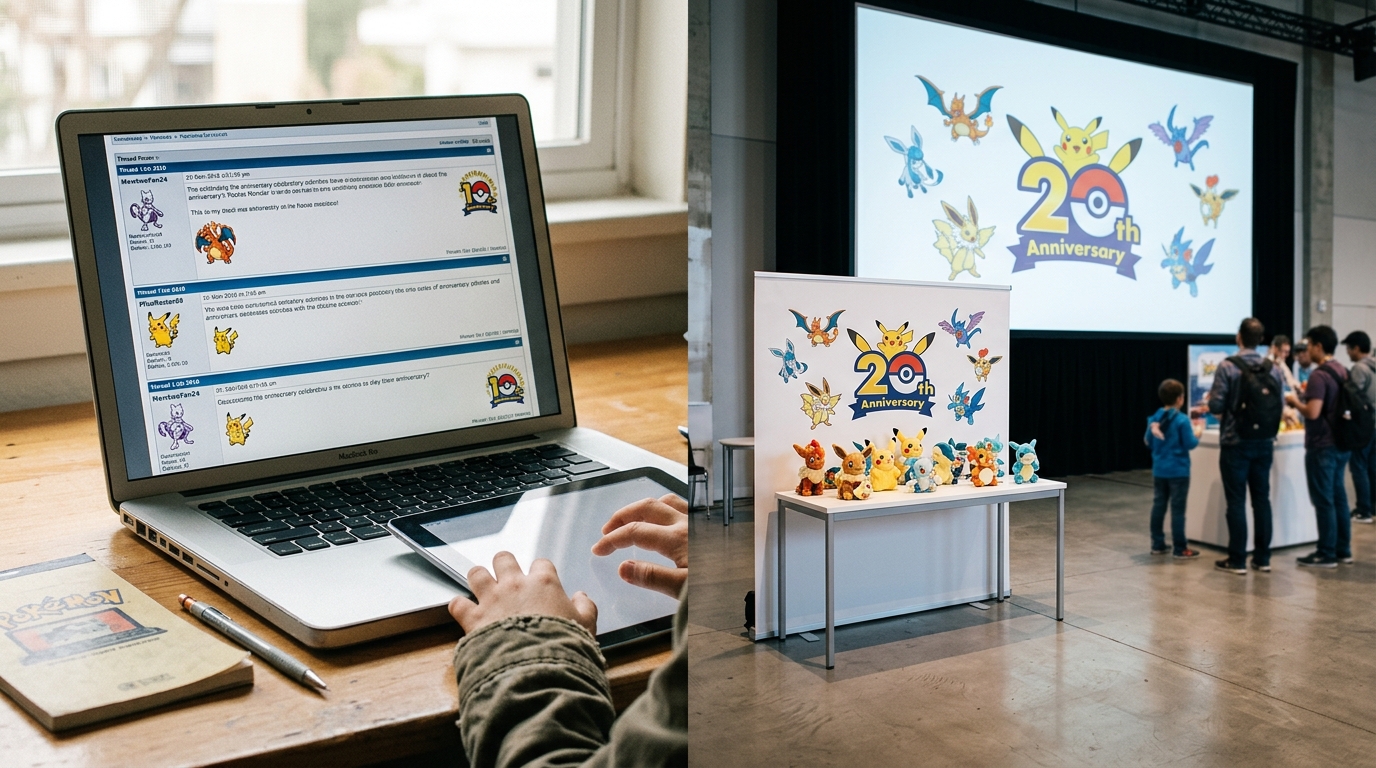
For almost twenty years, February 27 existed as a holiday that fans created on their own. People on Serebii forums, Bulbagarden, and the early Reddit threads marked the anniversary themselves.
They posted screenshots of their Red cartridges, shared fan art, and counted down the days when a round-numbered year was coming up.
Nintendo and Game Freak knew about these milestones internally. Still, there was no branded “Pokémon Day” sitting on any company calendar anywhere.
Then 2016 happened. To celebrate the 20th anniversary, The Pokémon Company International put together the first globally coordinated February 27 campaign.
That included a Super Bowl 50 commercial called “Train On” that aired on February 7, along with a limited giveaway of Mythical Pokémon that ran every month through 2016.
Plus special Nintendo 3DS Virtual Console releases of Red, Blue.
And Yellow, each priced at approximately $9.99.
The Virtual Console re-releases reportedly sold more than 1.5 million copies in the first month alone, according to Nintendo’s software unit reports.
The actual name pulled together around 2017 and 2018. The Pokémon Company started using “Pokémon Day” as a consistent capitalized brand term, meaning they wrote it the same way every time, across press releases, their social media channels with the #PokemonDay hashtag, and the official Pokemon.com newsroom.
By 2019, every big announcement was being stamped to February 27. New game reveals. Pokémon GO events and TCG drops too.
So when people ask why is February 27th Pokémon Day in an official capacity, the answer really has two layers. Fans claimed the date first. Then the company put a formal stamp on something that already existed in the wild.
How Pokémon Day Is Celebrated Around the World
Pokémon Day now follows a pretty predictable six-part playbook. The Pokémon Company essentially puts together a global 24-hour window full of announcements, drops, and in-game events, all timed carefully to keep the momentum going from Tokyo in the morning all the way through to Los Angeles at night.
⚠️ Common mistake: Assuming Pokémon Day marks the 1998 North American release of Red and Blue. This happens because Western fans grew up with the localized versions and often forget the franchise originated in Japan two years earlier. The fix: Remember Pokémon Day honors the February 27, 1996 Japanese launch of Pocket Monsters Red and Green, which The Pokémon Company officially designated as the worldwide anniversary in 2016.
The anchor event is really the Pokémon Presents broadcast, which is a video presentation that runs somewhere between 15 and 30 minutes.
And it typically airs at 9:00 AM ET on February 27. The 2024 Presents pulled in over 2 million people watching at the same time on YouTube.
And it revealed Pokémon Legends: Z-A.
This is basically where the big roadmap reveals happen. New games, expansion dates, mobile titles, all of that.
And around the main broadcast, five smaller satellite activations also fire off:
- Pokémon GO: there’s a Pokémon Day-themed event with boosted shiny rates and a costumed Pikachu (sometimes a party hat, sometimes sunglasses, sometimes a cake costume, with a different one every year)
- TCG drops: special Pokémon Center products, often a 151-themed or anniversary-numbered set, with print runs that genuinely sell out in under an hour
- Scarlet and Violet distributions: Mystery Gift codes for items like Master Balls or specific Tera-type Pokémon, which you can redeem during a 48 to approximately 72 hour window
- Anime specials: short episodes or trailer reveals on the official Pokémon YouTube channel, dubbed in more than 7 languages
- #PokemonDay fan art campaign: the hashtag actually generated 1.4 million X/Twitter posts during the 2023 cycle
One practical tip I always share. Redeem your Mystery Gift codes within the first approximately 24 hours. The servers are under the heaviest load right at launch, but some of the codes are locked to specific regions and they quietly expire before the event “officially” wraps up.
That little timing quirk, along with the worldwide broadcast schedule, is a big part of the answer when people ask Why is February 27th Pokémon Day functioning as a coordinated commercial holiday and not just another date on the calendar.
A Year-by-Year Log of Major Pokémon Day Announcements
The question of why is February 27th Pokémon Day becomes a lot clearer when you look at what The Pokémon Company has chosen to release on that date since 2020. You can see a very consistent pattern.
Major announcements that would typically get their own dedicated Nintendo Direct are instead saved for this specific day.
- 2020 — Sword and Shield Expansion Pass. The reveal for The Isle of Armor and Crown Tundra downloadable content happened during a Pokémon Direct on February 27th. This was the first time the main series had ever gotten a paid expansion pass, which was a real shift away from the old model of releasing a third version, like Emerald or Platinum.
- 2021 — Pokémon Presents debut + Brilliant Diamond/Shining Pearl + Legends: Arceus. The 25th-anniversary stream introduced the “Pokémon Presents” format we know today. And it announced two games at the same time. Arceus went on to ship 14.8 million units by March 2024, according to Nintendo’s IR software sales data.
- 2022 — Scarlet and Violet teaser. Generation 9 was announced during a 14-minute Pokémon Presents. That stream gave the franchise its very first open-world mainline title.
- 2023 — Scarlet/Violet DLC (The Hidden Treasure of Area Zero). They confirmed a two-part paid expansion. They also distributed the Walking Wake and Iron Leaves Paradox Pokémon.
- 2024 — Pokémon Legends: Z-A reveal. A sequel to Legends set in the Kalos region was announced for 2025. It instantly became the most talked-about gaming trailer on YouTube within approximately 48 hours.
So you have five straight years of reveals that basically defined the franchise’s future. That turns February 27th into Nintendo’s single biggest marketing day outside of a traditional Direct. It’s a fixed date that investors and retailers now literally build their inventory plans around.
Common Misconceptions About Pokémon Day
Pokémon Day actually marks the 1996 Japanese release of Pocket Monsters Red and Green, and nothing else. Four myths keep popping up on Reddit threads and trivia sites, and each one gets the history wrong in its own way.
Myth 1: It’s Pikachu’s birthday. Pikachu has no official birth date in the story. The character was designed by Atsuko Nishida back in 1995, then finalized internally months before launch.
Fans sometimes mix the two up because Pikachu ended up becoming the franchise mascot. But really, the date honors the games, not a single creature.
Myth 2: It marks the anime premiere. The Pokémon anime actually debuted on TV Tokyo on April 1, 1997. That was over 13 months after the games shipped. It’s a separate anniversary the studio sometimes acknowledges, though it’s not Pokémon Day.
Myth 3: It celebrates the U.S. launch. Pokémon Red and Blue reached North America on September 28, 1998, which was roughly 31 months after Japan got them.
Western fans asking why is February 27th Pokémon Day instead of September 28 often miss the point. The holiday tracks the franchise’s true origin, not its regional rollout.
Myth 4: It’s a Nintendo holiday. It isn’t, actually. The Pokémon Company International, which is a separate entity co-owned by Nintendo, Game Freak, and Creatures Inc. since 1998, is the group that runs the event. Nintendo publishes the games but doesn’t own the holiday itself.
How to Participate in Pokémon Day This Year
Pokémon Day runs on a 24-hour window starting roughly 6 AM PT / 9 AM ET / 2 PM GMT on February 27. The Pokémon Presents broadcast is the anchor event, everything else (in-game distributions, merch drops, community meetups) clusters around that announcement.
Here’s the checklist that veteran fans actually use.
The Morning-Of Checklist
- Set a 9 AM ET alarm for Pokémon Presents. The stream goes live on the official Pokémon YouTube channel. Past broadcasts run 12–25 minutes. The 2024 stream pulled over 1.2 million concurrent viewers within the first five minutes.
- Log into Pokémon GO before noon local time. Niantic typically runs a Pokémon Day event with a featured Mythical (Mew in 2022, Jirachi raids in 2023) and 2× Stardust bonuses. Spin a PokéStop to grab the free Timed Research.
- Boot up Scarlet/Violet and Pokémon HOME. Mystery Gift codes drop within hours — usually a shiny starter or commemorative item. Codes stay live for 2–4 weeks, but rarer event Pokémon use distribution windows under 72 hours.
- Check r/pokemon and the Silph Road Discord. Crowd-sourced threads compile every regional code, merch link, and TCG sleeve drop within an hour of release.
- Follow @Pokemon on X. Surprise reveals (new anime trailers, Pokémon Center exclusives) hit social first, then YouTube.
One overlooked tip: the answer to why is February 27th Pokémon Day matters for serious collectors because Japanese Pokémon Center stores release date-stamped merchandise that retains resale value, 2016’s 20th anniversary pin set now trades for approximately $180+ on eBay.
Frequently Asked Questions About Pokémon Day
Is Pokémon Day a public holiday anywhere?
No, it really isn’t. Pokémon Day has no legal standing in Japan, the United States, or any other country in the world.
Schools stay open as normal, banks keep processing payments, and Nintendo’s offices in Kyoto run a regular workday. Basically, it’s a brand anniversary recognized by the company itself, kind of like Star Wars Day on May 4.
Fans celebrate it and marketing teams promote it, but governments pay it no attention at all.
Did Ash Ketchum’s birthday inspire the date?
No, the two are completely unrelated. According to a profile published in CoroCoro Comic back in 1998, Ash’s birthday is actually May 22.
The February 27 date came first, beating the anime to air by 14 months. It refers strictly to the day the original Game Boy cartridge hit store shelves.
Why isn’t Pokémon Day on the U.S. release date (September 28, 1998)?
The reason comes down to where the company sits. The Pokémon Company is headquartered in Tokyo, so it recognizes the original Japanese launch as the true starting point.
Roughly 70% of all the money Pokémon has ever earned still flows through decisions made about the Japan-based intellectual property. Because of that, the Japanese release date carries the official weight worldwide.
Has the date ever changed or moved?
Never once. Since the very first official Pokémon Day back in 2016, every single celebration has landed squarely on February 27, even on years when it falls on a Tuesday or Wednesday.
The Pokémon Presents video broadcasts might shift by a few hours depending on the time zone, though the date itself stays locked in place.
What was announced on the very first official Pokémon Day in 2016?
The Pokémon Company pulled back the curtain on Pokémon Sun and Moon for the Nintendo 3DS. They also confirmed a worldwide launch window for late 2016.
On top of that, they launched the Virtual Console re-releases of Red, Blue, and Yellow. Those versions moved 1.5 million copies in their opening week alone, according to Nintendo’s own investor briefing.
That single announcement set the playbook going forward. It really explains why is February 27th Pokémon Day a date that matters commercially, and not just for sentimental reasons.
Conclusion — A Birthday That Outgrew Its Origins
A quiet Tuesday in Tokyo essentially kicked off a approximately $147 billion media franchise, which is the highest-grossing one in history, according to TitleMax’s franchise revenue rankings. And that’s really the actual reason Why is February 27th Pokémon Day.
Nintendo shipped Pocket Monsters Red and Green out to a pretty skeptical retail market back in 1996. Game Freak had almost gone completely bankrupt trying to finish the thing.
After six years of development, a dying Game Boy console, and only 23,000 launch copies, the franchise that almost never existed became the one that every other company tried to copy.
The holiday itself tells a smaller and somewhat stranger story. The fans actually built it first.
Threads on Bulbagarden, countdowns over at Serebii.
And birthday art tags basically kept February 27 alive all through the late 1990s and into the 2000s, well before The Pokémon Company ever filed any official branding around the date. So by the time corporate Pokémon Day finally arrived in 2016 for the 20th anniversary, the date already belonged to the community.
Here are three things worth doing before next February 27 rolls around:
- Set a calendar alert for 6 AM PT / 2 PM GMT, which is generally when Pokémon Presents goes live on the official Pokémon YouTube channel.
- Follow @Pokemon on X and serebii.net for leak-free coverage during the window when announcements happen.
- Drop your very first Pokémon game in the comments, whether that’s Red, Blue, Yellow, Crystal, or something later on. The franchise has really lasted this long mostly because of the sum of all those starting points.