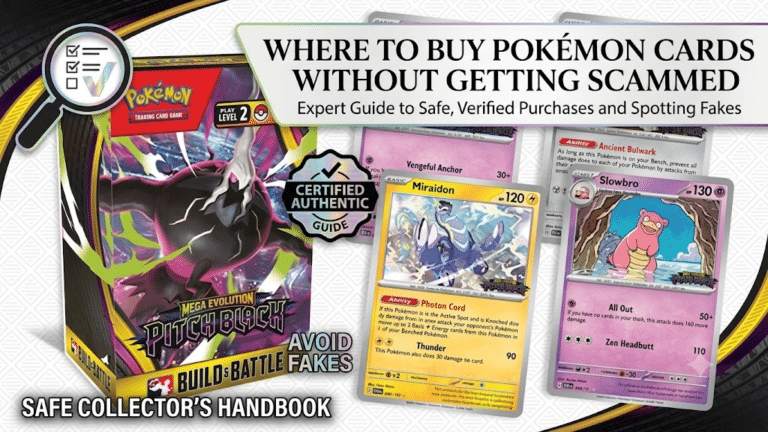
The best Pokémon cards for beginners come from structured starter products like the Scarlet & Violet Battle Academy (approximately $20) or a current-set Build & Battle box, not random booster packs. The Pokémon TCG has sold over 64.8 billion cards globally as of March 2025, yet roughly 70% of new players quit within three months, usually because they bought the wrong first product.
A complete beginner setup, including a Battle Academy, Elite Trainer Box, sleeves, and a binder, runs about $143.
When it comes to Pokémon cards for beginners, the smartest place to start is really a structured starter set like the Scarlet & Violet Battle Academy, or maybe a Build & Battle box from the current set. It’s generally not a good idea to just grab random booster packs from the shelf at checkout.
This guide walks you through seven specific picks, sorted by price, how easy they are to learn.
And how well they hold their value if you resell. The goal is essentially to turn a approximately $20 purchase into a collection you can actually play with and build on, instead of just a drawer full of duplicate cards you don’t need.
Quick Takeaways
- Start with Battle Academy (approximately $20) instead of random booster packs to learn core rules.
- Budget around $143 for a complete beginner setup with sleeves and binder.
- Buy an Elite Trainer Box from the current set for nine packs plus accessories.
- Protect valuable pulls immediately with Ultra Pro sleeves and 35pt toploaders.
- Avoid the approximately 70% beginner dropout rate by choosing structured products over impulse pack purchases.
The 7 Starter Picks Every Pokémon Card Beginner Should Grab First
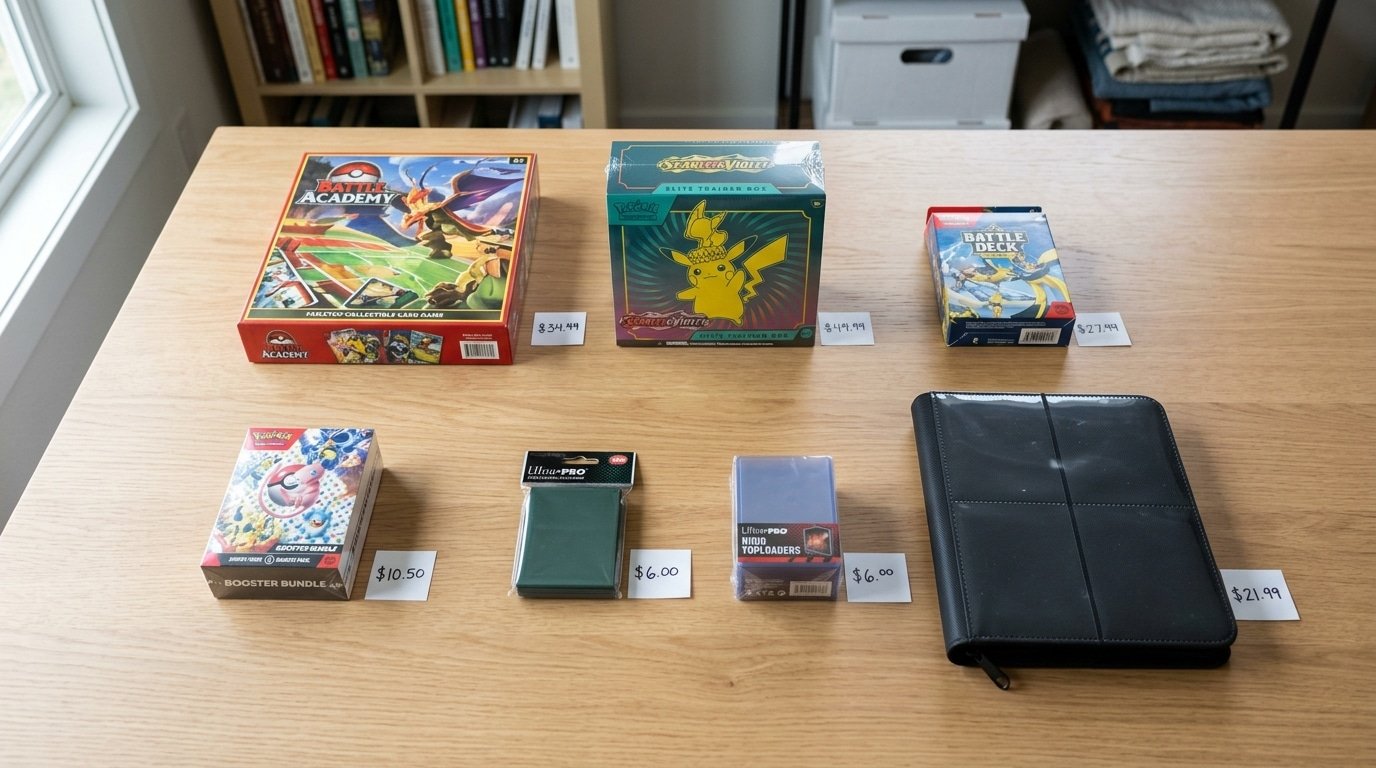
Quick answer: Start with Battle Academy (approximately $20), a current-set Elite Trainer Box (approximately $50), one theme/starter deck (approximately $15), a booster bundle (approximately $25), a 100-pack of Ultra Pro sleeves (approximately $8), a 25-count toploader pack (approximately $5), and a 4-pocket zip binder (approximately $20). Total: around $143.
Each item teaches one specific skill, playing, opening, deckbuilding, or protecting.
| # | Product | Price | What It Teaches |
|---|---|---|---|
| 1 | Pokémon Battle Academy (3 ready decks + board) | approximately $19–25 | Rules, turn structure, energy types |
| 2 | Current-set Elite Trainer Box (ETB) | approximately $45–55 | Set identity, 9 booster packs, sleeves, dice |
| 3 | Starter/theme deck (e.g., Battle Deck) | approximately $14–17 | A legal 60-card deck out of the box |
| 4 | Booster bundle (6 packs) | approximately $24–28 | Pull rates, rarity recognition |
| 5 | Ultra Pro Eclipse sleeves (100ct) | approximately $7–9 | Standard 66xapproximately 91mm card protection |
| 6 | Toploaders, 35pt (25ct) | approximately $4–6 | Storing hits and trade-ready cards |
| 7 | 4-pocket zip binder (side-loading) | approximately $18–22 | Safe display without corner damage |
One pro tip beginners miss: skip 9-pocket top-loading binders. Cards slide out the top and bend corners, a problem flagged repeatedly by graders like PSA, where edge whitening drops a card from Gem Mint 10 to a 7 and can cut value by approximately 60% or more.
Side-loading zip binders prevent that. This is the cheapest mistake to avoid early in Pokémon cards for beginners.
Collect, Play in Person, or Play Pokémon TCG Live — A Decision Flowchart
Quick answer: Go with collecting if you want actual cards in your hand. Pick in-person play if you’ve got two or more friends nearby.
Or try Pokémon TCG Live if free practice sounds better. Honestly, most Pokémon cards for beginners money gets totally wasted because folks buy those big starter boxes before they even figure out which path they’re really on.
So run yourself through these three questions:
- Do you want cards you can keep forever? If yes, buy singles or grab a starter box from the current set. If no, skip down to Q2.
- Do you have at least one actual human opponent within driving distance? If yes, pick up Battle Academy for approximately $20, which actually includes 3 ready-to-play decks. If no, head to Q3.
- Want to learn the game free first? Download TCG Live. A single approximately $4.99 code card from any booster pack basically unlocks a digital version of that pack inside the app.
Budget vs. Goal Matrix
| Goal | approximately $5 spend | approximately $50 spend | Better pick |
|---|---|---|---|
| Compete online | 1 code card → 10+ digital packs over a week of ladder play | ETB with 9 physical packs you can’t play online without scanning each code | approximately $5 code card |
| Nostalgia collecting | One Charizard reprint single from TCGplayer | ETB pulls average approximately $15-25 in resale value | approximately $50 ETB |
| Kitchen-table play | Not enough cards for a legal deck | Battle Academy + extras | approximately $50 Battle Academy bundle |
Here’s the trap. You buy a approximately $50 starter box when what you actually wanted was online ladder play. You’ll punch in those 9 codes inside TCG Live in under 10 minutes, and then the physical cards just sit in a drawer collecting dust.

Your First $20 — What to Actually Spend It On
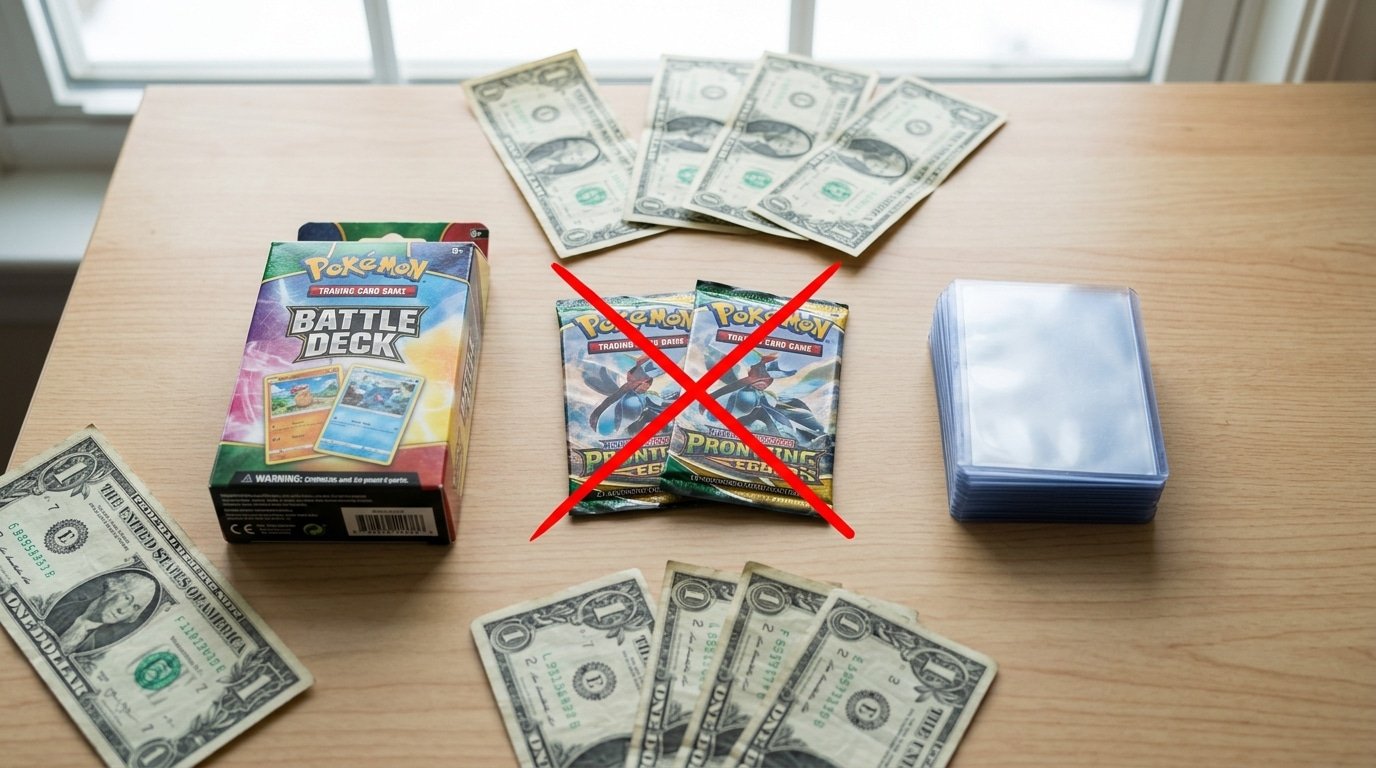
Quick answer: Spend approximately $15 on a current theme deck (now called a Battle Deck) and $4 on a 65-pack of Ultra Pro penny sleeves. Skip the two booster packs. You’ll keep approximately $1 in change and walk away with 60 playable cards instead of 20 random ones.
Here’s the math that destroys the booster-pack fantasy. A standard pack holds 10 cards, and current Scarlet & Violet sets pull a “hit” (holo rare or better) roughly 1 in 3 packs based on collector logs at PokeBeach and PullRateTracker.
Two packs at approximately $4.49 each = approximately $8.98 for about 20 cards, with a approximately 55% chance you get zero playable rares. The other approximately $11 buys you nothing.
Now the Battle Deck route. For approximately $15 you get a pre-built 60-card legal deck, a coin, damage counters, a rulebook, and one foil promo. That’s a ready-to-play product the moment you open it, no deckbuilding, no missing energy cards.
The sleeves matter more than beginners think. Raw cards lose 20-approximately 40% of resale value once edges whiten or surface scratches appear (PSA grading drops from a 9 to a 7). Penny sleeves cost about 6 cents each and prevent that damage from day one.
Rule for Pokémon cards for beginners: buy products with guaranteed contents before products with random contents.
Your First Month — Learning Rarity, Sets, and Real Card Value
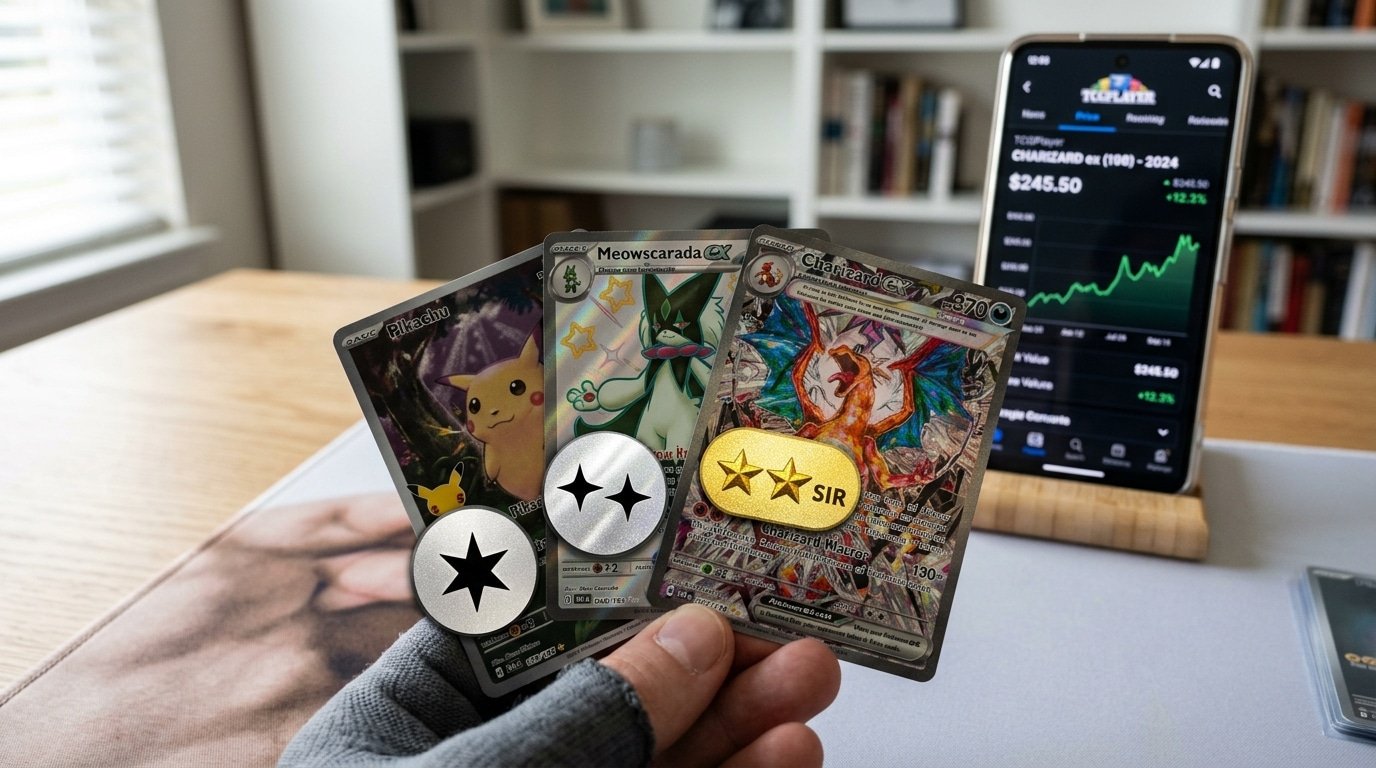
Quick answer: Read the rarity symbol in the bottom-left of each card, find the set code next to it (like “SVI 045/198”), then check the live market price on TCGPlayer before you trade or buy. Skip the printed price guides, they go stale in weeks.
Rarity Symbols Decoded
- Black circle — Common. Worth pennies. You’ll pull 6 per booster.
- Black diamond — Uncommon. Still cheap, but key for deck building.
- Black star — Rare or Holo Rare. The “shiny” card most packs guarantee.
- Two silver stars — Double Rare (ex cards). Usually approximately $1–$8.
- Gold star with “AR” — Illustration Rare. Full-art Pokémon, approximately $3–$25 range.
- Two gold stars “SIR” — Special Illustration Rare. The chase cards, often approximately $30–$200+.
Reading Set Codes
A code like SVI 045/198 means Scarlet & Violet base set, card 45 of approximately 198 in the main set. Numbers above 198 (like 199/198) are “secret rares”, pulled from the same packs but not listed on the back of the box.
Checking Real Market Value
Two free tools handle approximately 95% of pricing for Pokémon cards for beginners. Use TCGPlayer for current US singles prices, sort by “Market Price,” not the lowest listing.
For sealed product and graded card history, PriceCharting shows 6-month trends so you can spot cards that spiked on hype versus ones with steady demand.
Spotting Fakes, Reprints, and Trap Products on Amazon and Walmart Shelves
Quick answer: Stick to buying sealed product only from Target, Walmart, GameStop, or directly from Pokemon Center. On Amazon, you really want to confirm that it says “Ships from and sold by Amazon.com”.
Because third-party sellers who use Fulfillment by Amazon (FBA) actually mix their inventory together.
So counterfeits can slip into otherwise authentic boxes.
And just skip any “mystery box,” “vintage booster pack,” or repackaged blister being sold by some brand name you’ve never heard of before.
The 4-step authenticity check
- Back color: Genuine cards have a deep back that leans slightly purple-blue. Fakes tend to look like a bright royal blue or a washed-out gray instead.
- Font weight: On counterfeit cards, the HP numbers and the attack text usually print noticeably bolder and thicker. Just compare it to a card you picked up at Target.
- Light test: Hold the card up to a lamp. Real cards actually have a thin black layer sandwiched between two paper layers, so they barely let any light through at all. Fakes basically glow.
- Rip test (sacrifice a common): Tear a bulk common card in half. Real ones show a black middle layer inside. Fakes are solid white all the way through.
Trap products flooding shelves right now
- Third-party “mystery boxes” on Amazon (running approximately $30–$150), these are almost always just repacked bulk thrown together with one card of middling value. Pokemon’s official retailer list doesn’t include a single one of these brands.
- Repackaged blisters sitting at gas stations and on discount endcaps, the booster packs inside may have actually been searched (essentially weighed to find the valuable cards) and then resealed.
- “Vintage-look” Base Set reprints, these are listings using 1999 imagery in the photos but actually shipping you modern Celebrations reprints, or in some cases just outright counterfeits printed in bulk overseas.
For Pokémon cards for beginners, the rule is kind of boring but really effective. If the price is sitting approximately 30% below MSRP on a current sealed product, something is wrong. Authentic Elite Trainer Boxes generally don’t go on a deep discount until the set itself has been replaced.
Building Your First Deck — From Theme Deck to a Legal 60-Card Build
Quick answer: Buy a approximately $15 Battle Deck, play it for two weeks, then rebuild it into a Standard-legal 60-card list pulled from Limitless TCG. Budget around $25,$30 for singles. Stick to one of two forgiving archetypes: Charizard ex (Pidgeot control engine) or Miraidon ex (electric aggro).
The four-copy rule and energy math
Standard format decks must be exactly 60 cards. You can run a maximum of 4 copies of any card except basic Energy.
For a beginner build, aim for this ratio: 14,16 Pokémon, 30,32 Trainers, 12,14 Energy. Miraidon ex lists run closer to 14 Energy because the attack costs three; Charizard ex lists run 9,10 because Pidgeot ex thins the deck fast.
Why these two archetypes are beginner-forgiving
- Charizard ex (Pidgeot control): Pidgeot ex’s Quick Search ability lets you grab any card from your deck once per turn — it forgives bad draws, which is the #1 reason new players lose.
- Miraidon ex: Its Tandem Unit ability puts two Basic Electric Pokémon onto your bench for free. The deck plays itself in the first two turns.
Skip Lugia VSTAR, Gardevoir ex, and any deck listing more than 6 ACE expected level or trainer-search chains. Those reward sequencing skill you don’t have yet.
Where to pull a real decklist
Filter Limitless by “Last 30 days” and “Tier 1.” Copy a list with at least 10 tournament finishes. For Pokémon cards for beginners, expect the singles bill to land between $22 and $28 if you already own basic Energy from your Battle Deck.
Storage and Protection — The Hidden First-Year Cost Nobody Mentions
Quick answer: A full first-year protection stack for Pokémon cards for beginners costs about $53: penny sleeves (approximately $4/100), perfect fits (approximately $6/100), toploaders (approximately $10/25), a 9-pocket binder (approximately $25), and a 400-count cardboard box (approximately $8). Sleeve everything you play with. Toploader only the cards worth over $5.
The Four-Tier Protection Pyramid
Each tier exists for a reason. Skip the wrong one and you’ll scratch a chase card within a week.
- Penny sleeves (soft plastic, ~approximately $0.04 each): mandatory for any card going into a deck or binder. Ultra Pro and Dragon Shield are the trusted brands.
- Perfect fits (inner sleeves that hug the card before the penny sleeve): only needed for cards over $20 or for tournament play. Double-sleeving prevents edge whitening.
- Toploaders (rigid PVC holders): use these for trades through the mail or any single card worth approximately $5+. Skip them for bulk commons — they waste space.
- Binders and boxes: side-loading binders only (top-loading ones let cards slide out and bend corners). The Ultra Pro PRO-Binder at ~approximately $25 holds 360 cards.
When Each Tier Is Overkill
Sleeving every Magikarp common is a rookie move. Bulk cards (commons and uncommons under $0.25) belong loose in the 400-count box, the cost of sleeves exceeds the card value.
PSA’s own grading guide notes that surface scratches account for roughly 30% of failed grades, so reserve double-sleeving for cards you might one day submit to PSA grading.
Five Beginner Mistakes That Quietly Drain Your Wallet
Quick answer: Most new collectors lose approximately $100,$300 in their first year to five avoidable mistakes, chasing chase cards in loose packs, over-sleeving bulk, buying graded cards blind, trading unfairly with kids, and falling for fake “vintage booster box” listings on Facebook.
The five traps, ranked by dollar damage
- Loose pack chasing (approximately $40–$80 lost). A current set has roughly 1 in 50 packs containing the chase Special Illustration Rare. At approximately $5 a pack from a hobby shop, ripping 15 packs to chase one card averages approximately $75 — when the single sells for approximately $30 on TCGplayer. Buy the single.
- Sleeving every common (approximately $25 lost). A 100-pack of Ultra Pro sleeves runs approximately $4. Sleeving 400 bulk commons burns approximately $16 in sleeves protecting cards worth under a penny each. Sleeve only playables and holos.
- Buying graded cards before learning grading (approximately $50–$150 lost). A PSA 8 looks identical to a PSA 9 to an untrained eye, but the price gap can be 3x. Beginners overpay for low-grade slabs marketed as “investment grade.”
- Trading with kids without checking values (approximately $10–$40 lost). Pull up the card on TCGplayer before agreeing. A “cool shiny” Charizard might be a approximately $2 reprint — or a approximately $90 alt art.
- Facebook “vintage booster box” listings (approximately $200+ lost). Genuine Base Set boxes sell for approximately $15,000+ at Heritage Auctions. Any Facebook listing under $1,000 is a reseal or counterfeit. No exceptions.
Pokémon cards for beginners reward patience over impulse. Skip these five and your first-year hobby spend stays under $200.
Frequently Asked Questions From New Pokémon Card Collectors
Are 1999 Base Set cards worth money? Most aren’t. The 1999 print run had two waves: the rare “Shadowless” version (no drop-shadow on the right side of the artwork box) and the common “Unlimited” version.
Unlimited holos like Machamp sell for approximately $5,$15 raw on eBay. Shadowless Charizard, however, fetches approximately $400+ raw and over $10,000 in PSA 9.
Check for the shadow before you celebrate.
Should I get cards graded? Only if the raw card is worth approximately $80+. PSA’s cheapest tier runs approximately $19.99 per card plus shipping (see PSA’s service levels). Grading a approximately $10 card and getting a PSA 8 leaves you underwater.
What’s the difference between “ex” and “EX”? Lowercase “ex” is the current 2023+ mechanic (Charizard ex, Miraidon ex). Uppercase “EX” ran from 2003,2007 and again as “EX” on full-art Pokémon from 2013,2016. They’re different rule sets and different eras, don’t mix them in a Standard-format deck.
Is the Japanese version cheaper? Yes, Japanese booster packs cost about ¥180 (~approximately $1.20) versus approximately $4.49 for English. But Japanese cards are illegal in official English-language tournaments, so they’re collecting-only for most Pokémon cards for beginners.
Where do kids actually play in person? Local game stores running sanctioned League Challenges. Find one via the official Pokémon event locator, entry is usually approximately $5.
Your Next Step After the First Deck and First Binder
You’ve spent your first approximately $20 on a Battle Deck and sleeves. You’ve survived month one learning rarity symbols and set codes. You’ve rebuilt a legal 60-card deck and slotted your keepers into a binder. So what’s next?
Three concrete moves, in order.
- Find a local league. Use the official Play! Pokémon event locator to search by zip code. League Challenges run weekly at most game stores, cost approximately $5 entry, and award promo cards. Playing two live matches teaches more than ten hours of solo practice — you’ll learn prize-trade math and bench management against real opponents.
- Watch one full deck profile from a pro. Tord Reklev (2017, 2018, and 2022 World finalist) and Azul Garcia Griego post deck breakdowns on YouTube that explain Why each card slot exists. One 25-minute video will reframe how you read decklists. Skip random TikTok openings — they teach nothing about competitive play.
- Set a monthly cap. Decide on a fixed number — approximately $25, $50, whatever fits — and stick to it. A 2023 hobby spending survey by Card Ladder showed collectors with written budgets spent approximately 41% less in their first year than those who didn’t track. Pokémon cards for beginners stay fun when the spending stays bounded.
That’s the whole path. Deck, binder, league, mentor, budget. Come back to this guide in six months and you’ll be the one answering questions.